Metrc Tags and RFID
Metrc RFID Tags
Metrc "tags" are a cornerstone of Metrc's compliance system, enabling standardized tracking of cannabis plants and products from growth to sale. Each cannabis plant or product is assigned a unique identifier (UID) issued by Metrc, which allows items to be identified and monitored throughout the supply chain.
Each tag is a 4"x1.5" rectangular piece of printed plastic linked to a UID in Metrc's database. The UID is a 24-character identifier that uniquely represents a plant batch, individual plant, or cannabis package. For example, 1A440000C030000000001234 is a UID.
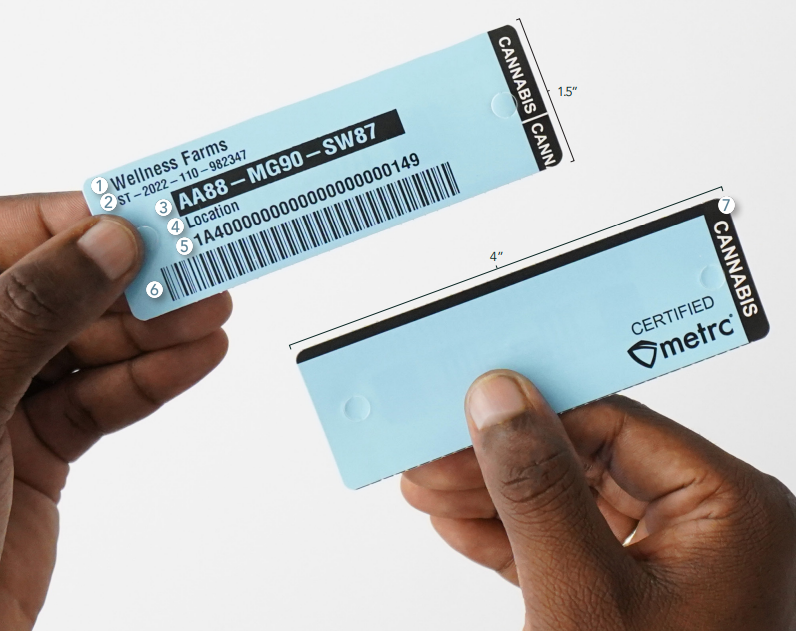
A Metrc tag identifies the corresponding UID in three ways:
- Printed UID: The UID is printed on the tag.
- Barcode: A Code 128 barcode is included, which can be scanned with an optical barcode scanner.
- RFID Chip: An embedded UHF RFID chip returns the UID when scanned with an RFID reader.
Each UID can only be owned by one cannabis license at a time, and these UIDs are transferred between licenses using transfers.
Types of Metrc Tags
- Plant Tags: Applied to individual mature plants, and in some states, plant batches.
- Package Tags: Applied post-harvest to any quantity of cannabis in any form that is not waste.
How RFID Readers (Scan Guns) Work in Metrc
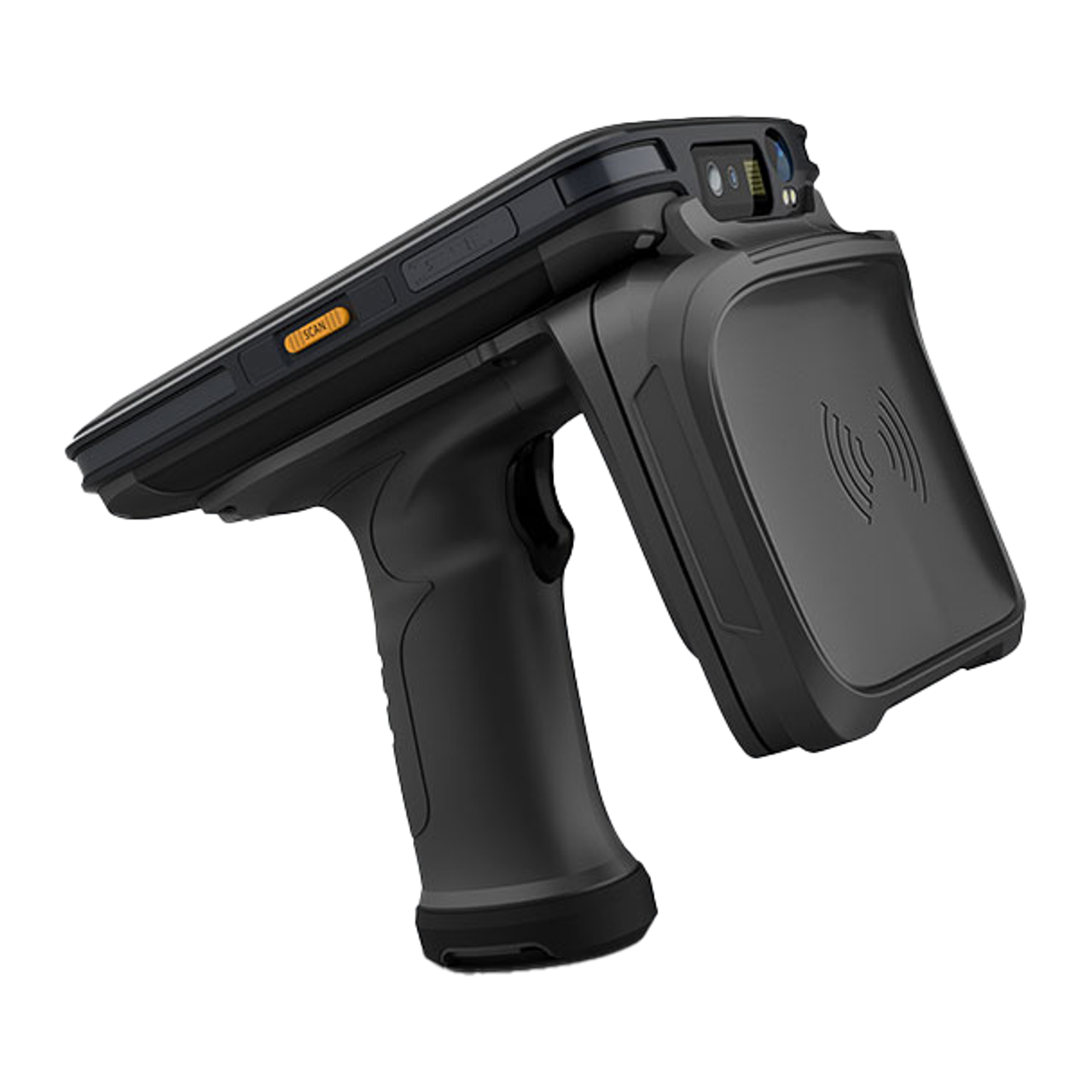
RFID readers ("scan guns") emit radio waves to locate and read tags within range, and can in principle read many tags at once. How the technology itself works, the frequency bands involved, and the kinds of reader available are covered in What is RFID?. What follows is how that plays out specifically in Metrc.
Criticisms of RFID in Metrc
The use of RFID technology in Metrc presents several challenges:
-
Interference and Environmental Factors: UHF RFID readers are sensitive to interference from metal surfaces, water, and electronic devices, which are common in grow facilities. For example, humidity and metal shelving can interfere with signal transmission, making it difficult to read tags reliably.
-
Read Range Variability: While UHF RFID tags are theoretically scannable from distances up to 20-30 feet, real-world conditions often reduce this range. Operators frequently need to move closer to tags or perform multiple scans to capture all required data, undermining the intended efficiency of RFID tracking.
-
Read Directionality: UHF readers typically have directional antennas, making them more effective when pointed directly at a tag. In busy environments where tags may be stacked or positioned at awkward angles, directional limitations result in missed scans, requiring manual rescanning.
-
Batch Scanning Issues: Metrc promotes RFID for batch scanning, which should theoretically capture data from multiple tags simultaneously. However, inconsistent performance often results in partial reads, where only some tags are successfully captured.
-
Missed Scans and Unreliable Data: Due to interference, tag placement, and system limitations, missed scans and unreliable data capture are common. This often forces operators to conduct manual checks, which negates the intended benefits of RFID automation.
Cost and Environmental Impact
Metrc's RFID tags are costly and single-use, contributing significantly to operational expenses for cannabis businesses. Additionally, the disposal of RFID tags, which contain electronic components, generates considerable e-waste. Operators across the U.S. must purchase thousands of tags annually, only to dispose of them at the end of the year, which raises both financial and environmental concerns.
Practical Use of RFID in Metrc Compliance
Each RFID tag in the Metrc system contains a unique identifier that links to detailed records, including plant strain, growth stage, weight, and batch information. RFID readers communicate with these tags by emitting radio waves, which activate the tags and prompt them to send back data. This information is then captured by the reader and recorded in the system, ideally allowing for seamless inventory management.
However, in practice, the technology's inconsistent performance complicates inventory tracking and compliance processes. Many operators rely on manual data entry to supplement RFID tracking due to frequent read failures and interference. This hybrid approach increases the workload and diminishes the potential efficiency gains RFID was intended to provide.
RFID in Metrc has become a double-edged sword for cannabis operators. While it was designed to streamline compliance, the technology often requires constant vigilance and manual intervention, leading to increased burdens on staff and less reliability in maintaining accurate records.
Next Steps
- How RFID works as a technology: What is RFID?.
- Scan Metrc tags from a phone with T3 OpenTag.
- Back to Metrc.